

DOOM turns 32 and still feels more dangerous than most modern shooters. Here’s why id Software’s demon-fueled classic remains one of gaming’s purest and loudest forms of chaos.
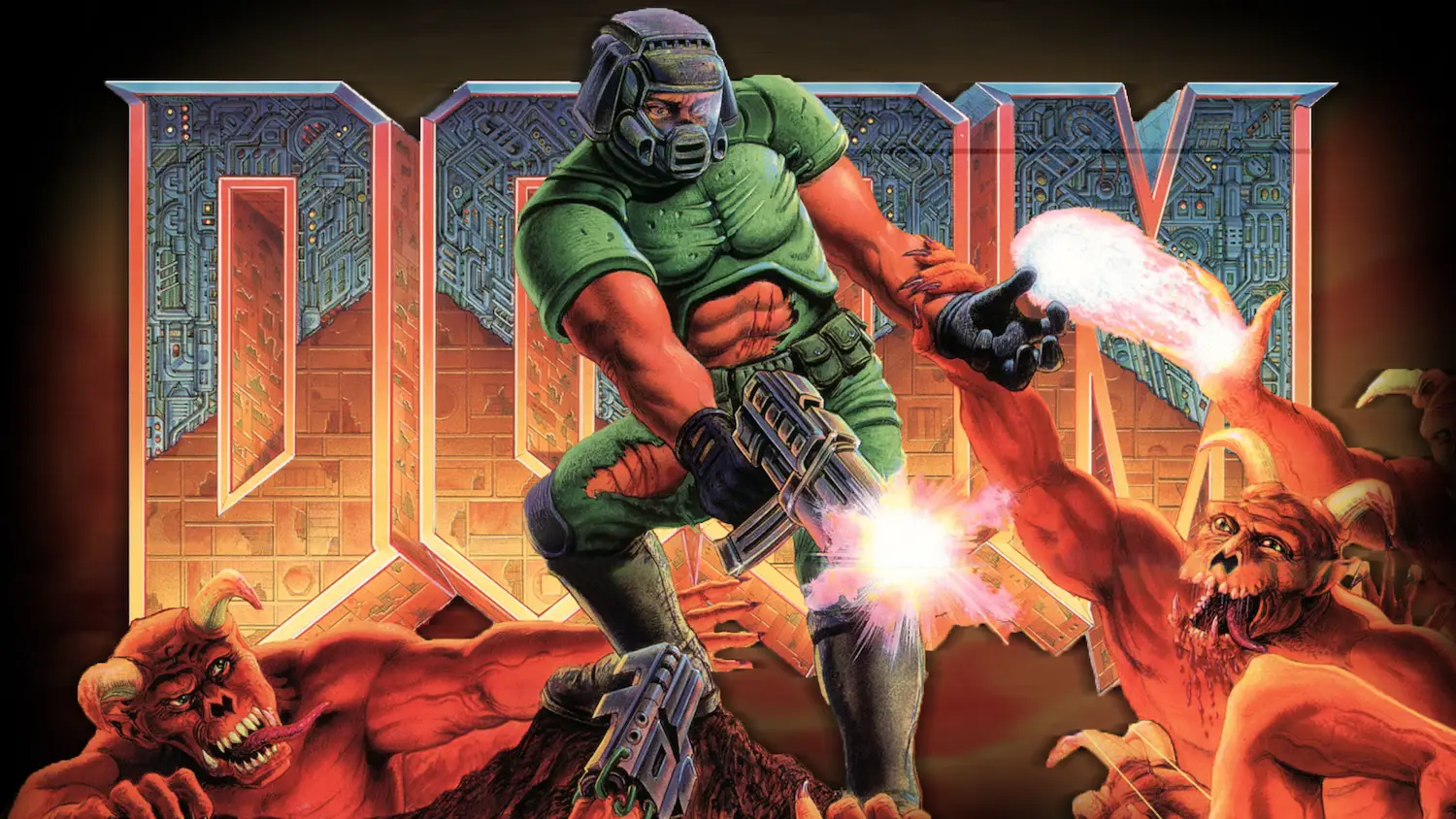
Released on December 10, 1993, the original DOOM did more than launch a hit franchise. It helped define the first-person shooter as we know it and became one of the most influential games ever made. Even Bethesda still frames that original launch date as a turning point, and on DOOM’s 32nd birthday, co-creator John Romero called it “a rebellion of a game” that players have kept alive for generations.
That is the real reason this anniversary matters.
Not because DOOM is nostalgic. Not because retro is trendy. And not because people suddenly want to pretend 1993 was some perfect golden age.
DOOM matters because chaos used to feel honest.
This was a game with blood, speed, metal energy, demonic imagery, labyrinth maps, and absolutely no interest in holding your hand. It did not want to reassure you. It wanted to throw you into hell and dare you to survive.
And somehow, after 32 years, that attitude still feels fresher than half the industry.
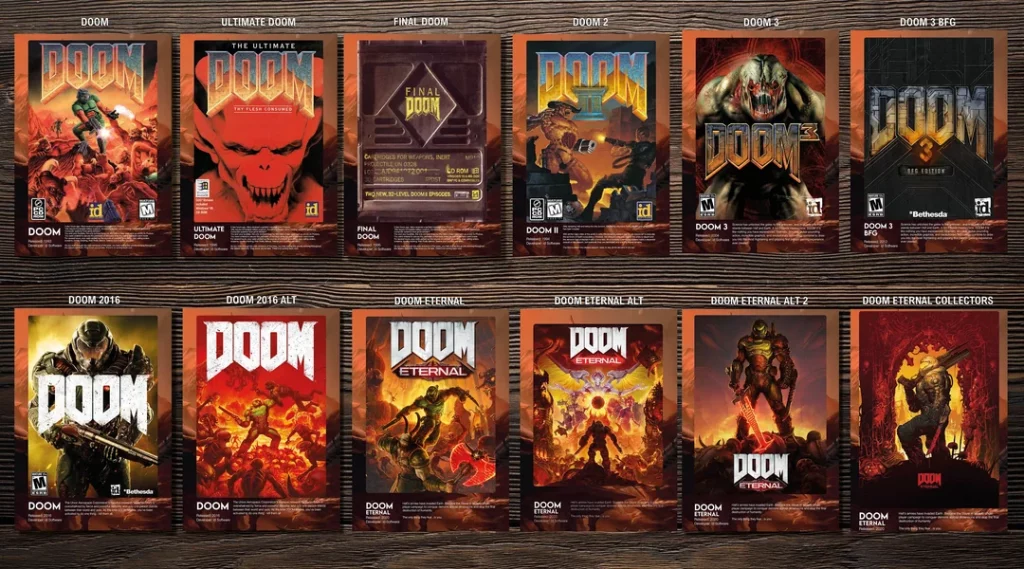
Why DOOM Still Feels So Violent
A lot of games are violent.
Very few feel like DOOM.
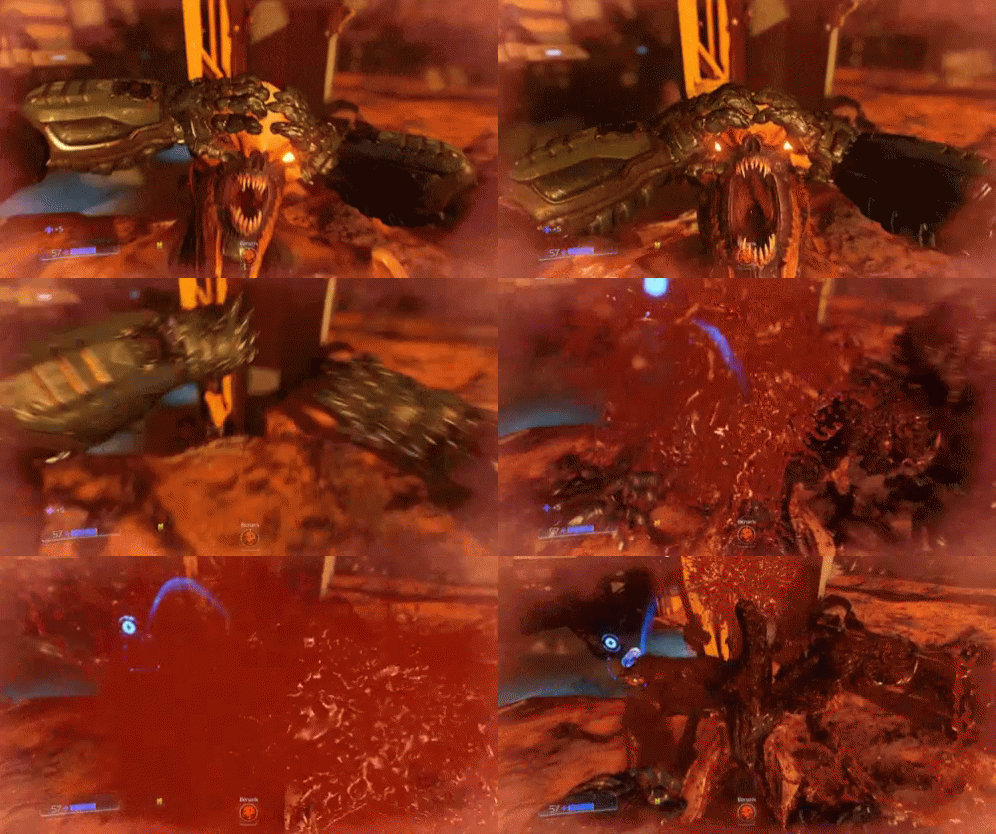
That is because DOOM’s violence was never just about gore. It was about rhythm. Movement. Panic. Pressure. It had that perfect ugly beauty where every hallway felt like a trap and every room felt like a dare.
Modern shooters often want to feel cinematic. DOOM wanted to feel like a riot.
That difference matters.
Even now, the original game still looks like it was made by people trying to break something. Not just technical limits, but taste itself. It was loud, aggressive, satanic, controversial, and impossible to ignore. That edge helped push DOOM into cultural legend, and Bethesda’s own anniversary material still treats it as one of the foundations of the genre
The Beautiful Filth of DOOM
What made DOOM unforgettable was not realism.
It was texture.
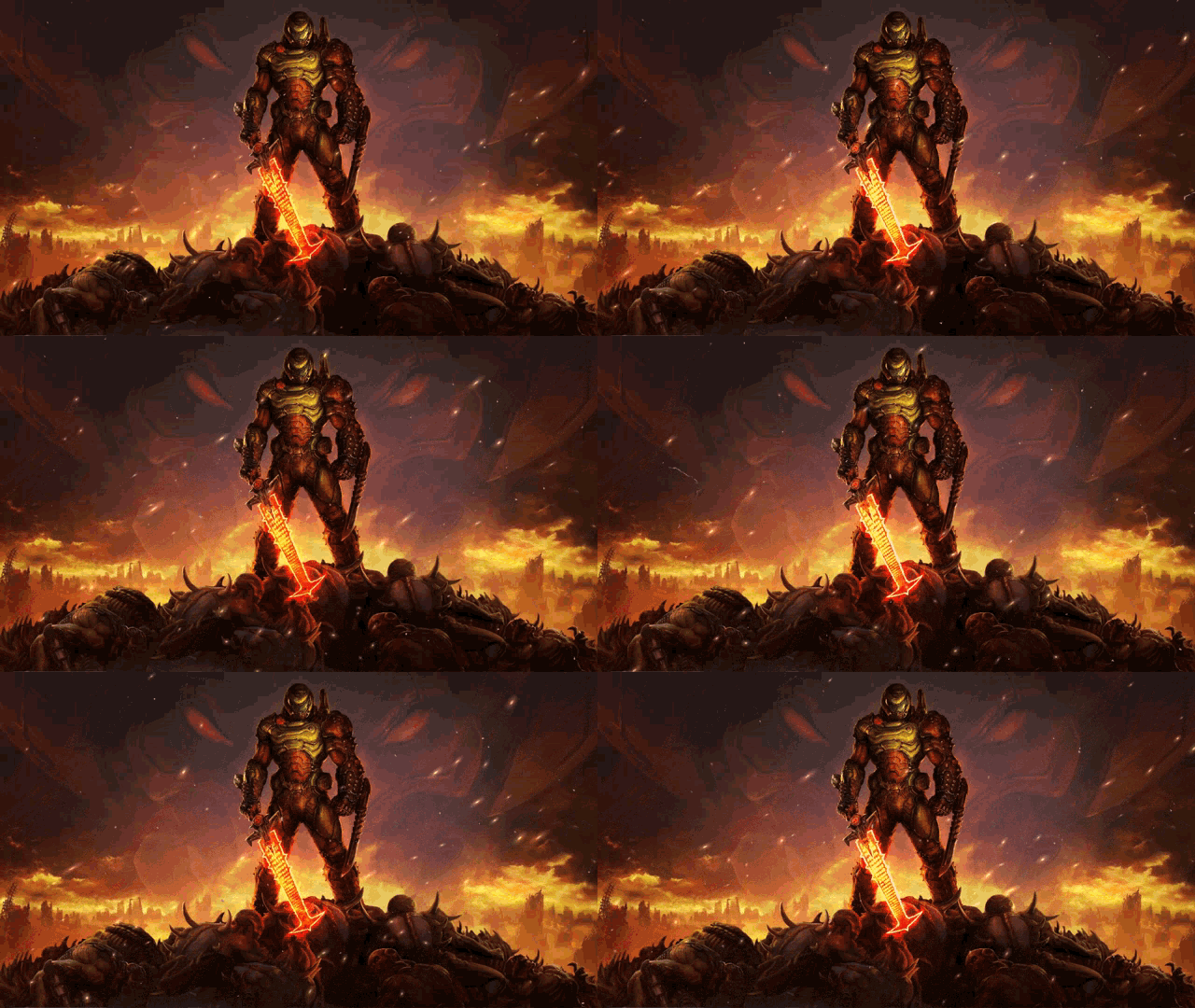
The game looked filthy. Metallic. Infernal. Claustrophobic. It mixed sci-fi machinery with hellish iconography in a way that still feels wrong in the best possible sense. It never looked clean, safe, or massaged for broad approval.
That is why DOOM still hits.
There is something almost offensive about how direct it is. You are not here for branching dialogue. You are not here for prestige storytelling. You are here to blast through a nightmare of flesh, steel, and noise.
And honestly, gaming needs more of that.
Because chaos is not a flaw in DOOM.
Chaos is the product.

DOOM Never Really Died
Most old games survive through memory.
DOOM survived through obsession.
Bethesda’s 30th anniversary celebration highlighted exactly why: deathmatch memories, endless WADs, community-made add-ons, and decades of players refusing to let the game fade away. That community didn’t just preserve DOOM. It extended it. Rebuilt it. Remixed it. Weaponized it. 
That is what separates DOOM from normal nostalgia bait.
It is not just remembered. It is still being used.
People still mod it, still speedrun it, still port it to absurd devices, still argue about its maps, still celebrate its soundtrack, and still treat it like a living relic of pure game design. Romero’s anniversary message made the same point: generations of players kept the fire burning. 
So yes, DOOM is 32 years old.
But it still feels mean enough to punch the present in the mouth.
Why This Anniversary Actually Matters
Gaming has become bigger, prettier, safer, and more expensive.
But safer is not always better.
DOOM came from an era when games were allowed to feel reckless. That recklessness helped shape an entire genre, and even official Bethesda retrospectives still describe the original release as a moment after which gaming was never the same.
And that is why “DOOM Celebrates 32 Years of Chaos” works as more than just a nice headline.
It is true.
Because DOOM was never just about demons or shotguns. It was about energy without apology. A game built to be fast, ugly, thrilling, controversial, and unforgettable.
Some franchises age into museums.
DOOM still smells like smoke.
It's DOOM’s 32nd birthday today! It amazes me how far this rebellion of a game has travelled. We wanted to build the the greatest game we could imagine playing, and generations of players have kept it alive. It’s one of the great privileges of my life. pic.twitter.com/uCOOagWT3e
— John Romero 🤘🏽 (@romero) December 10, 2025
DOOM Curiosities
DOOM didn’t just change shooters, it changed the energy of gaming itself. Here are a few quick facts about the franchise that turned chaos into a permanent legacy.
Who created DOOM?
DOOM was created by id Software. Os nomes mais ligados ao jogo original são John Carmack, John Romero, Tom Hall, Adrian Carmack, Kevin Cloud, Sandy Petersen, Dave Taylor e Bobby Prince
Why do people say “Can it run DOOM?
Because DOOM became famous for being ported to almost everything.
Over the years, people have managed to run DOOM on calculators, printers, ATMs, smart fridges, cameras, car dashboards, and other absurd devices. It turned into a meme because the game is both legendary and strangely portable.
Was DOOM accused of being satanic?
Hell Yes! and that controversy became part of its legend.
Because of its demons, pentagrams, hell imagery, gore, and violent tone, DOOM was attacked by religious critics and moral panic culture almost immediately. But that only made it feel even more dangerous and rebellious to players.
Who is Doomguy?
Doomguy is the nickname fans gave to the original DOOM protagonist.
In the classic games, he was not a deeply explained cinematic hero. He was more like pure attitude in human form: a space marine dropped into hell with guns, rage, and zero interest in diplomacy. That simplicity is part of what made him iconic.
Did DOOM invent deathmatch?
DOOM did not invent multiplayer combat by itself, but it helped make deathmatch legendary.
The term became heavily associated with DOOM, especially after its fast LAN battles turned into a huge part of PC gaming culture. It helped define how competitive shooters would feel for years.
Why was the original DOOM so shocking in the 1990s?
Because it felt faster, louder, bloodier, and more aggressive than what many players had seen before.
It was not just about violence. It was the whole package: demonic enemies, frantic speed, dark corridors, metal-inspired energy, and the feeling that the game wanted to overwhelm you. In 1993, that hit like a chainsaw to the face.
Is it true that DOOM’s monsters were made from weird real-world materials?
Hell Yes, some classic DOOM assets were created using physical models, digitized textures, and scanned artwork techniques.
That helped give the original game its strange, grimy, almost tactile look. A lot of classic DOOM feels dirty in a way that modern clean digital design often does not.
Why is DOOM modding so legendary?
Because players never stopped rebuilding the game.
DOOM’s community kept creating new levels, total conversions, joke mods, brutal overhauls, visual upgrades, and experimental projects for decades. That is one reason the game never really died, it kept mutating.
Why do fans still love classic DOOM maps?
Because they feel like deadly puzzles — not just arenas, but twisted spaces full of traps, secrets, and pressure.
Final Thoughts
DOOM Celebrates 32 Years of Chaos is more than just a headline — it is the truth.
Very few games still feel this raw, aggressive, and unforgettable after so much time. DOOM did not become legendary because it was safe or polished. It became legendary because it had attitude, speed, violence, and the kind of identity that modern games rarely dare to chase.
That is why this anniversary still matters.
DOOM is not just a classic. It is a reminder of what happens when a game is built to hit hard, look dangerous, and leave a permanent mark on the industry.
Some franchises grow older.
DOOM just keeps getting louder.





Comments
annabrown
Thanks for sharing this information is useful for us.
cmsmasters
Always happy to be of service.
miaqueen
This is awesome!!!
cmsmasters
Thanks.